Pandemic blues drive demand for mental health apps in Singapore
SINGAPORE: Offering guided meditations, health workshops and even training opportunities for staff to get certified care providers are some of the ways foodpanda is building upwardly its mental health back up for employees.
The food delivery platform said the initiatives have been well-received, and with mental health and well-beingness becoming a priority amid a prolonged COVID-19 pandemic, it is looking to exercise more than.
Starting this month, foodpanda is providing its employees across 12 markets free access to a i-cease mental health back up platform.
The platform – an app powered by Singapore-based mental wellness outset-up Intellect – provides a range of self-guided tools, from five-minute long "rescue sessions" for stress to weeks-long self-care programmes. Users can also book ane-on-one online consultations with licensed counsellors and behavioural coaches.
This follows a three-calendar month trial in its Singapore function earlier in April, which yielded "overwhelmingly positive" results. Ninety-eight per cent of employees surveyed asked for the app to exist included as part of the company'southward mental health benefits, the company said.
Since and then, more than 250 employees based in Singapore have signed up for the app. It was extended to employees in other markets on Oct 1.
"With the Intellect app, nosotros can provide personalised support for employees working in different countries, which is especially of import when COVID-19 has prevented in-person meetings and travels," said foodpanda'south caput of people Ingo Laubender.
"The app can be a friend that employees lean on, specially when they need immediate mental health support. It also destigmatises the notion of speaking to a licensed professional."
Foodpanda is not the merely company providing employees with mental wellness-related back up.
Virtual platforms centred on mental health and wellness, such as Intellect, said they have seen a surge in demand for their services since the pandemic erupted and brought nigh new ways of life, such as remote working and physical distancing.
"The pandemic has blurred piece of work-life residual and reduced social interactions, leaving employees feeling isolated and disengaged at work," said Intellect's co-founder and chief executive Theodoric Chew.
"However, nosotros also see greater mental health awareness as companies are recognising that their employees' workplace satisfaction and productivity are direct linked to their mental well-beingness."
SURGE IN Need
Intellect, which launched its services in April last twelvemonth, told CNA that its enterprise platform now serves 20,000 employees from more than than 20 multinational companies and start-ups.
Apart from corporate clients, the start-up also has a gratuitous consumer app offer self-guided digital therapy programmes for individuals. Information technology said it now has more than than two.5 meg users in total.
"For an app … to grow past a one thousand thousand or ii in i twelvemonth is something that we see (every bit) a very articulate indicator that Asia or the world needs something like this, and we are in the right place to accost this," said Mr Chew.
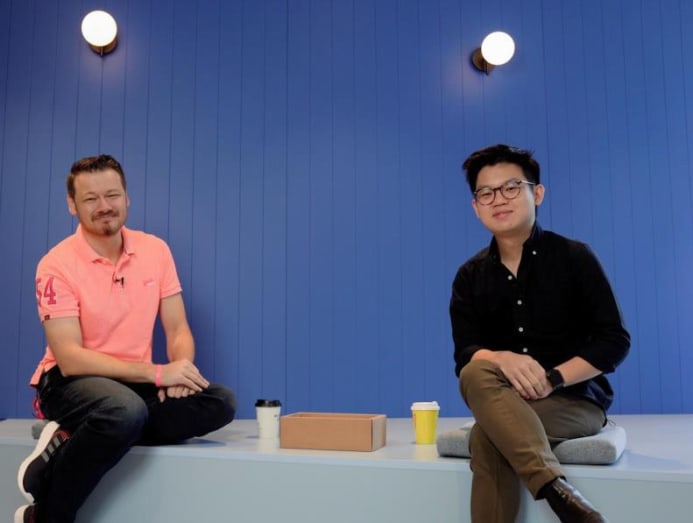
MindFi is another Singapore-based start-upward that has seen a nail in demand, as COVID-19 drew greater attention to mental health bug and too spurred the digitisation of healthcare.
"The pandemic has really helped to bulldoze this space forward and I could never have predicted that," founder Bjorn Lee said.
MindFi started out equally a consumer app in 2022 only given the neat in corporate demand last year, it has since switched to focus on providing digital mental wellness and wellness solutions for businesses.
It at present has over xxx enterprise clients beyond Asia, serving more than than 100,000 employees.
"Before the pandemic, nosotros had no corporate clients at all. In fact when we approached businesses in the by, (they) would go cold or ghost on the states. But the opposite is at present happening," said Mr Lee, calculation that businesses are noticing heightened stress and feet levels amid their workforce.
"And people are deciding to quit when they realise this doesn't align with their significant and purpose in life. I think that'due south what alarms the C-suite … and has acquired people to sit upwardly and change things."
MindFi said its applied science dishes out personalised recommendations based on a user's psychometric profile. It also provides guided self-intendance programmes and matches users with coaches and therapists.
Its virtually popular programmes include i-minute animate exercises where users are guided to inhale and exhale according to the vibrations of their phones.
In that location is likewise a "focus mode" that allows 1 to set a time required to stop up a chore. "During that fourth dimension, you're not allowed to check your telephone or navigate to other apps. And at the cease of that timer, you are recommended a meditation runway to aid reset your mind before moving on to another task," Mr Lee said.

The start-up said its unique selling point is in offering "seize with teeth-sized" mental health back up that is easy to integrate into daily routines.
"For example, the one-minute breathing do is usually done by users at the start of a meeting," added Mr Lee. "And so our app is actually very effective in helping people to take breaks during the day."
Both first-ups said they rely on clinically validated measures for their products and have been investing in inquiry and expertise to back up their therapies. They likewise placestrong emphasis on privacy. For example, MindFi anonymises employee data and aggregates them to generate team-level analytics reports for companies.
CORPORATE INTEREST
The National University Health Organization (NUHS) has tapped on MindFi to help its healthcare workers build mindful practices both at work and at abode.
Apart from complimentary access to the MindFi platform, NUHS as well partnered the outset-up to launch a 100-mean solar day mental health awareness program in October last twelvemonth.
This was to help healthcare workers deal with the many new challenges in patient care amid the pandemic, said NUHS Mind Science Middle'south director John Wong.
"Every endeavour was made to explore increasing the capacity of emotional support for frontline healthcare workers, as well as those working from dwelling to ensure that the healthcare cluster continues to function optimally," he told CNA.
NUHS also had a twelvemonth-long pilot partnership with mental health chatbot WYSA to provide staff with more digital self-care and monitoring tools. Other initiatives are on the mode, said Associate Professor Wong.
"We are planning to introduce programmes such every bit mindline.sg. We volition likewise be implementing the Emotional Literacy and Starting time Aid e-training for employees at end of 2022 to assist build mental health literacy."
At American customer service software firm Zendesk, employees get free admission to meditation apps like At-home, and other forms of mental health support such as therapy sessions with San Francisco-based mental health and wellness platform Modern Health.
This is on top of other company-wide initiatives like "Recharge Fridays" where employees become a 24-hour interval off.
"When COVID-19 hit, we responded quickly to the urgent demand to support (our employees) and implemented a number of initiatives," said Zendesk'south chief operating officer for Asia-Pacific Wendy Johnstone.
Through regular surveys, the visitor has garnered "overwhelming feedback" on the need for flexibility to balance life and work as the pandemic wears on.
"Equally such, we take introduced a series of well-being programmes that give our employees worldwide the flexibility to choose what works for them," said Ms Johnstone.
Online clothing retailer Zalora appear last calendar month that it will be giving all full-time employees mental health benefits, such equally free access to a meditation app and an online mental health platform for confidential counselling sessions with psychologists.
The company said it took "particular care" to review and compare multiple platforms to ensure that they met its requirements, such as privacy protections and the power to offer customised solutions for its multicultural teams in various markets from Hong Kong to Republic of indonesia.
Explaining the visitor's decision, general counsel and chief people officer Louise Pender said the shift to a hybrid work model has seen employees juggling work with responsibilities at home, while the ascension of video conferencing apps similar Zoom has resulted in "screen fatigue".
"Importantly, these initiatives are aimed at safeguarding our employees' mental health and enhancing their personal well-being, not just during the extended and ever-evolving pandemic state of affairs, but also moving into the futurity," she said.
FUTURE PLANS
Such demand has thus far spurred a surge in venture funding into mental health start-ups, non just in Singapore simply across the world.
Funding in this nascent infinite globally reached a record Usa$852 million in the first quarter of this twelvemonth, nearly twice the amount raised during the same period in 2020, according to research firm CB Insights.
Both Intellect and MindFi closed out funding rounds in Baronial. The former secured US$2.2 million in pre-series A funding, while the latter raised US$750,000 in pre-seed funding.
The start-ups said these funds will come in handy in enabling them to aggrandize into new markets and ramp up production offerings, equally demand for virtual mental wellness solutions will be here to stay beyond the pandemic.
"There are many great Us and Europe-based players but they are more than focused on self-care and mindfulness. What we are building is a full mental health organization," said Intellect's Mr Chew.
"Nosotros are also localised to our markets, from languages to the professionals we piece of work with … which is important because there are nuances in each market place," he added.
Mr Chew acknowledged that digital platforms may fall short for those who prefer face-to-face up support, only engineering science has its benefits such as being able to expand the reach and accessibility of much-needed mental health support in conservative societies.
His beginning-upward too hopes to "shift the narrative from something more clinically perceived to something more proactive and role of daily life".
"What we are trying to do is create access and make (seeking of mental health support) less stigmatised," said the young start-up founder.
Intellect said ongoing clinical studies washed with local and overseas universities and institutions are showing that the utilize of its programmes over 4 weeks can help reduce anxiety and stress levels past twenty and x per cent, respectively.
Over at MindFi, Mr Lee said its app is due to unveil a major update that will get in "a lot more relevant to the current piece of work-from-home lifestyles".
Describing it equally "a smart assistant", the app volition suggest customised recommendations based on user habits and time of the day.
"The pandora's box, in terms of the importance of mental health, has been opened. Companies are increasingly looking at this; governments are too putting out advisories and the media is talking about it, which is peachy," said Mr Lee, citing a recent article past CNA Insider which shed lite on the danger of work burn down-out among teachers in Singapore.
"As the pandemic evolves and becomes endemic and so on, people are going to expect a different kind of health package from their companies and also from their insurers. This is unlikely to become dorsum into the box now that we have kicked the door down."

Post a Comment for "Pandemic blues drive demand for mental health apps in Singapore"